1st Edition

About The Prize | Shortlisted Stories | Winners
About The Prize
The FA Yuletide Writing Prize is an annual creative writing contest that celebrates bold and profound stories by Nigerian writers. This opening edition explores the theme Dark Yuletide. We welcome stories that resonate with the lived realities of Nigerians.
The prize is proudly sponsored by Fortune Aganbi (Writer, Techie (DA), Entrepreneur; Longlist, Commonwealth Short Story Prize 2024).
Theme: Dark Yuletide
We are seeking non-cliché, creative stories that explore the darker atmosphere of the season.
Writers are free to approach the theme through:
- Horror or supernatural traditions
- African folklore
- Psychological or emotional thrillers
- Sci-fi or speculative reimaginings
- Surreal or dreamlike atmospheres
Preference will be given to stories that highlight the realities of the Nigerian experience.

Prizes
- 1st Place: ₦250,000
- 2nd Place: ₦180,000
- 3rd Place: ₦120,000
- Special Attempt: ₦50,000
Winning and shortlisted stories will be published on fortuneaganbi.com or the official associated platforms.
Eligibility
- Open to Nigerians aged 18 and above living in Nigeria.
- Only one entry per writer
- Story must be original, unpublished, and not written using AI
- Anonymous judging: the writer’s name must not appear anywhere in the submitted file
- Submissions must be uploaded as a PDF
- Must be following our social media handles: @fortuneaganbii
Submission Guidelines
File Format
- 1000–1500 words (excluding the title)
- PDF file only
- Filename must be the story title
- Font: Times New Roman, Merriweather, or Lora
- Font size: 12 pt, double-spaced
- Title placed at the top of the first page
- Pages numbered
Anonymity
Your name must not appear anywhere in the document.
Originality
Submitted work must be your own, unpublished, and not generated by AI tools.
Judging
All entries will be evaluated anonymously by:
- The sponsor (FA).
- A high-achieving author.
- A prestigious postgraduate scholar in literature.
- Other expert readers.
Judging criteria include:
- Originality
- Craft and technical execution
- Emotional impact
- Socio-relevance
- Interpretation of theme
Judges’ decisions are final.
Shortlisted writers may request feedback via our official email at: fa.writingprize@gmail.com.
Judges may be announced after the prizes are revealed.
Key Dates
- Submission Window: Dec 2 – Dec 29, 2025 (WAT)
- Shortlist Announcement: January 11, 2026
- Winners Announced: January 15, 2026
Winning Entries
First Prize
Best Christmas Ever – Chinaza Abigail Nwachukwu
Second Prize
Answered Prayers – Peter Ann Caroline
Third Prize
Where Shadows Walk – Omobolaji Olofinnika
Special Attempt
In The Bleakness Of— – Nwajesu Ekpenisi
Shortlisted Entries
To read the full stories, click on the titles.
- Best Christmas Ever – Chinaza Abigail Nwachukwu
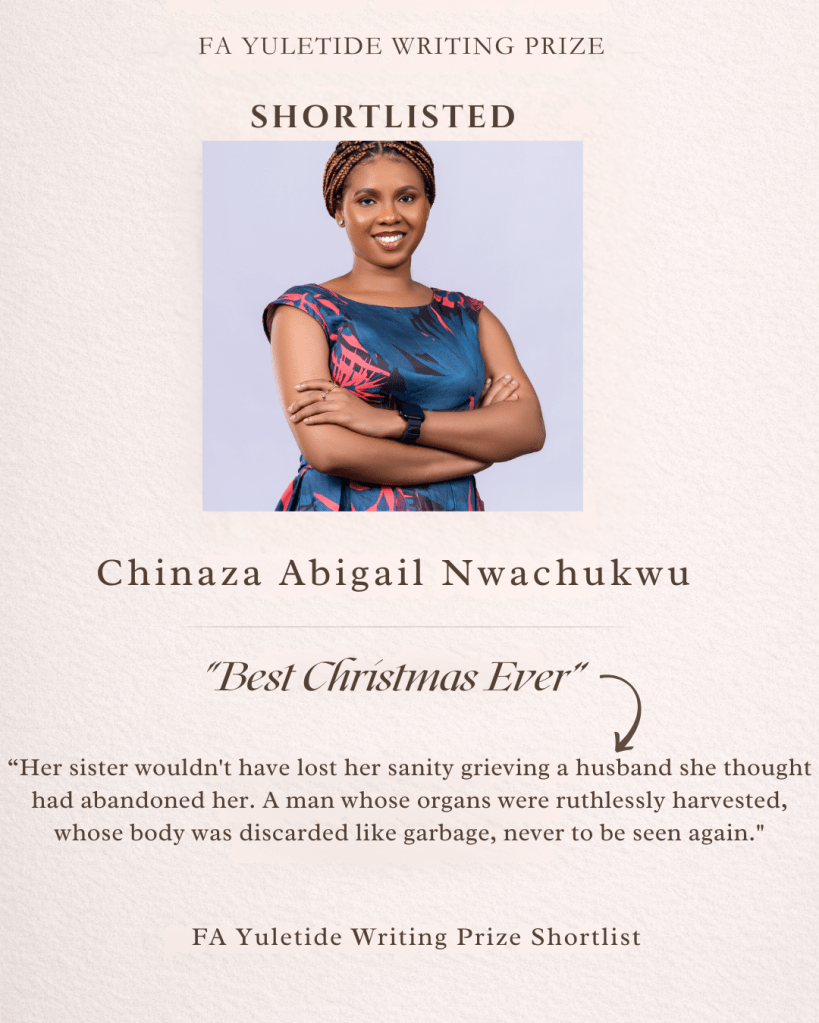
Best Christmas Ever explores how poverty, medical exploitation, and untreated grief can affect, shape, and sometimes destroy the lives of the people left behind. Set within a market community, the story creatively reflects familiar social realities: lack, abandonment, mental health, and most strikingly, the socio-political revelation of organ harvesting, which exposes how vulnerable bodies are exploited under the guise of medical care.
The story made the shortlist for linking intimate loss to systemic violence without overt moralising. The final reveal deepens the tragedy and lingers long after the page is turned.
2. Where Shadows Walk – Omobolaji Olofinnika
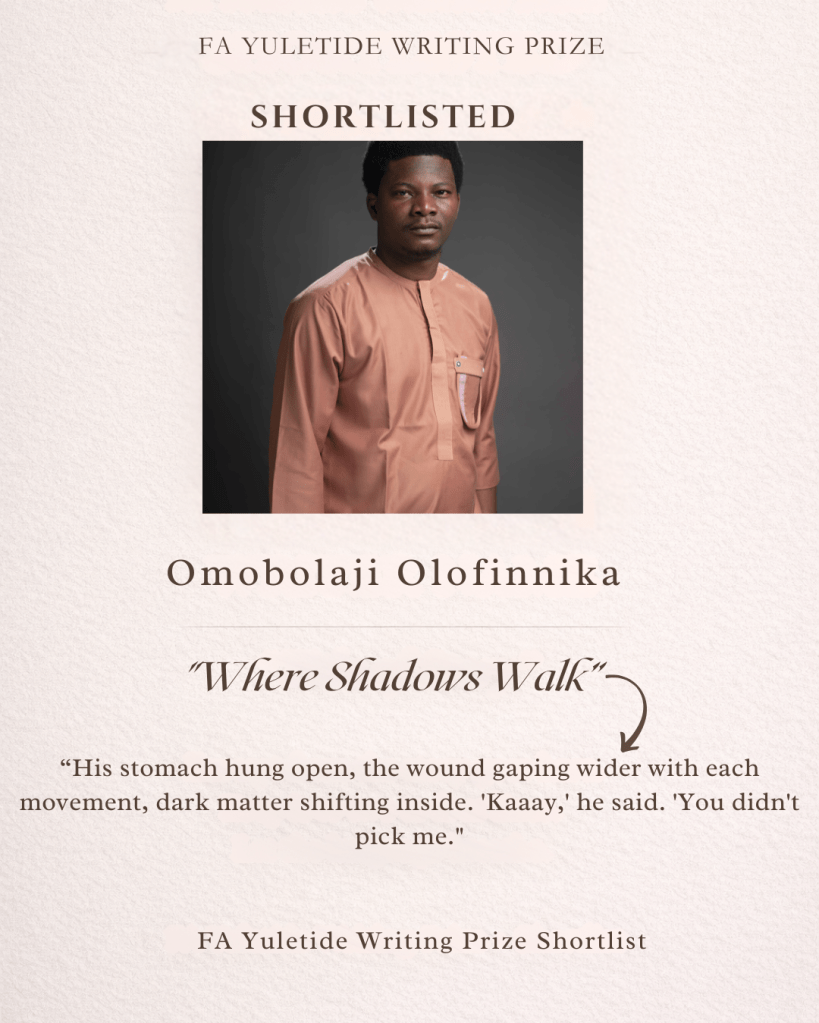
Where Shadows Walk is an unsettling story that expertly employs restraint in how it exposes unburied grief through the social-political lens of police killing. The creativity of this story is mostly rooted in a spiritual belief of twinhood.
The story stands out for its craft and boldness. It tackles a real and painful social issue through an original supernatural lens, avoiding sensationalism. The prose is controlled, the structure deliberate, and the blending of realism with cosmology is handled with confidence. It is both politically aware and artistically daring, which is why it earned its place on the shortlist.
3. The Girl Who Sits with Thread in Her Mouth – Oluwajomiloju Oyelude

The Girl Who Sits with Thread in Her Mouth explores themes of grief, mental illness, and spirituality. Set within a deeply familiar religious and domestic space, this story exposes how powerful silence can be, how men’s mental health is ignored, and how children are often forced to carry unprocessed loss. The story speaks directly to social realities around Pentecostal excess, stigma around mental health, and inherited trauma within families, reflecting the average Nigerian tendency to minimize mental illness or rename it as possession.
The story stands out for its craft and originality. Its central metaphor is precise and sustained, and the writing is controlled without being cold. Nothing feels accidental. The emotional weight is earned rather than forced.
4. In The Bleakness Of— – Nwajesu Ekpenisi
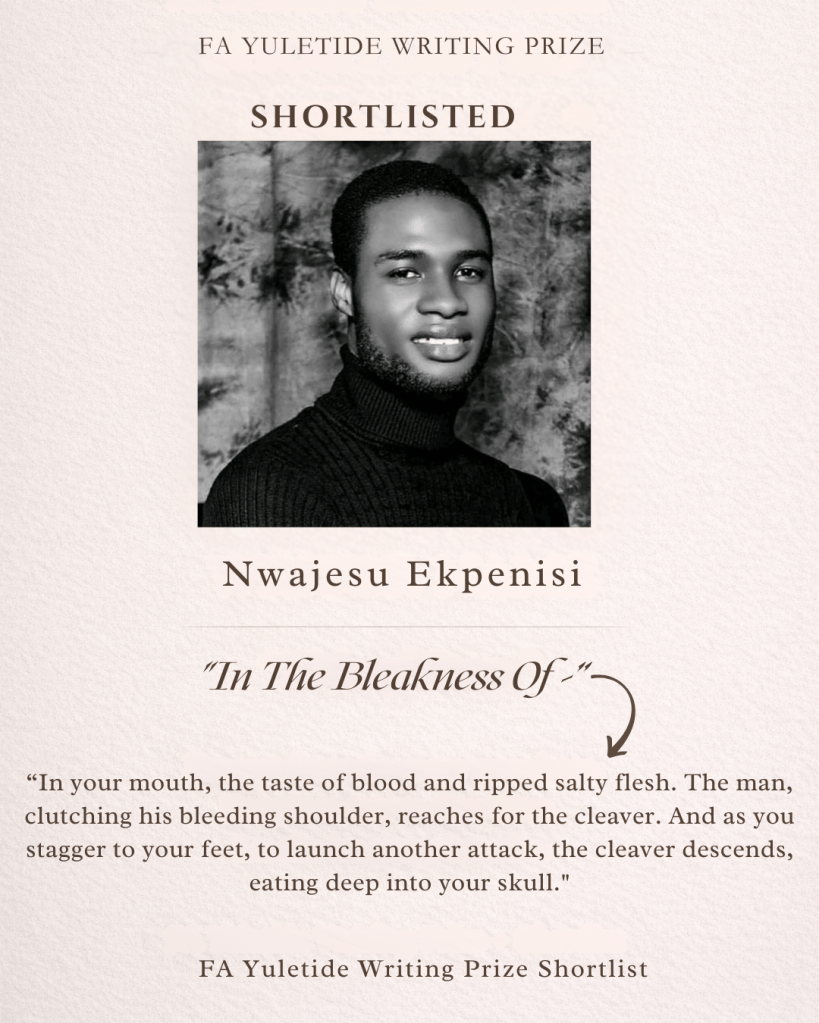
In The Bleakness Of— is set against a reality that many Nigerians recognise: the spike in kidnappings and violent crime during the yuletide season, turning a season associated with reunion into one of heightened fear and vulnerability.
This story stood out for its urgency and social grounding. Its opening is intimate and believable, and the violence that follows reflects a climate where people’s lives can be upended without warning. By placing this brutality within a festive period, the story exposes the fragile line between normalcy and terror.
5. Furo-wari, Obiobele – Ibiapuye Tom Oruwari
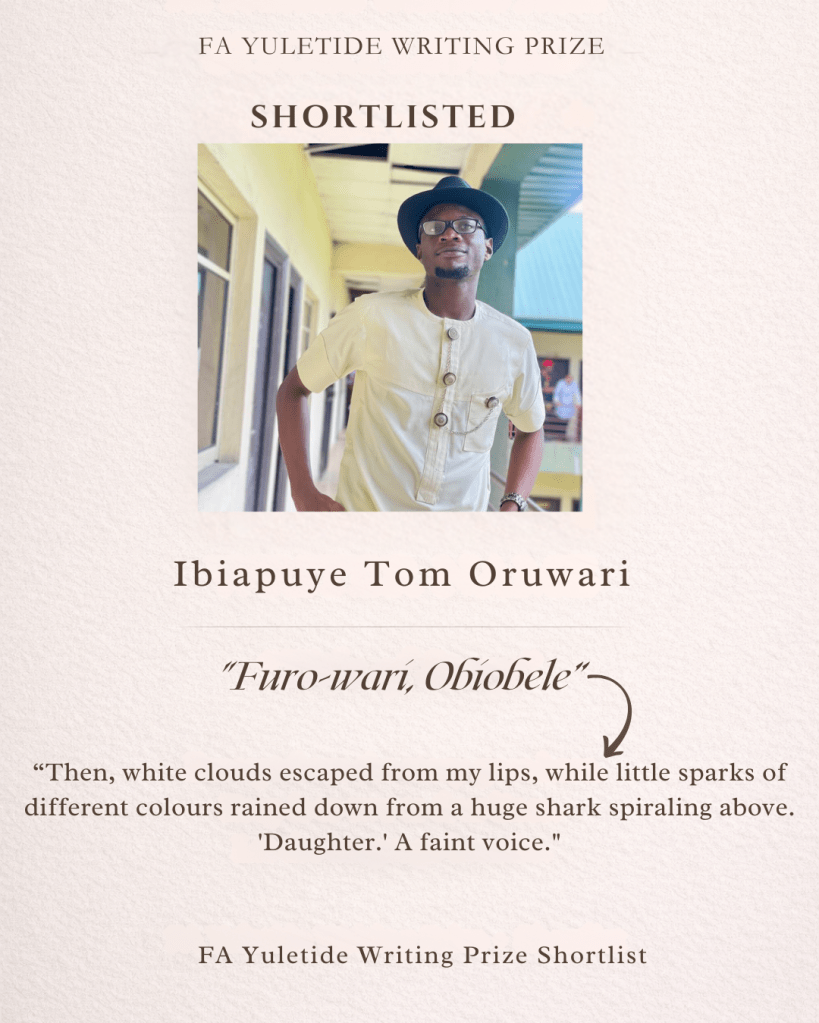
Furo-wari, Obiobele unfolds like a family memory that slowly slips out of place. What begins as a familiar Christmas return home — awkward Nigerian relatives, small arguments, inherited grudges — gradually opens into something stranger, old beliefs that have not disappeared just because the people stopped naming them.
This story does not strain for darkness or significance. Culture, humour, and danger coexist side by side, much like they often do in real life. The story trusts its materials and allows meaning to surface on its own terms.
6. Answered Prayers – Peter Ann Caroline

Answered Prayers is a sharp, unsettling story about power, hypocrisy, and the dangers of unchecked religious authority. This story follows a pastor whose desperation for relevance and success opens the door to something he cannot control.
The story stands out for its boldness and originality. Using confession and dark satire, it turns the familiar language of church, worship, and testimony into something deeply uncomfortable.
7. A Cup of Red for the Visitors – IkeChukwu Henry

A Cup of Red for the Visitors draws on folklore and communal life to examine how silence becomes a means of self-preservation. It reflects the recognizable social pattern of families and communities preserving peace by refusing to confront buried violence, historical guilt, or inherited wrongdoing. It unravels cultural expectations surrounding respect for tradition and obedience to elders, even when those traditions are harmful.
What sets the story apart is its control of atmosphere and cultural grounding. Efe’s rebellion reflects a generational tension common in Nigerian homes, where younger people question practices their parents feel powerless to abandon. By framing silence as a communal bargain rather than a personal failing, the story earns its place on the shortlist.
8. A Christmas To Remember – Precious Chidinma Osuagwu
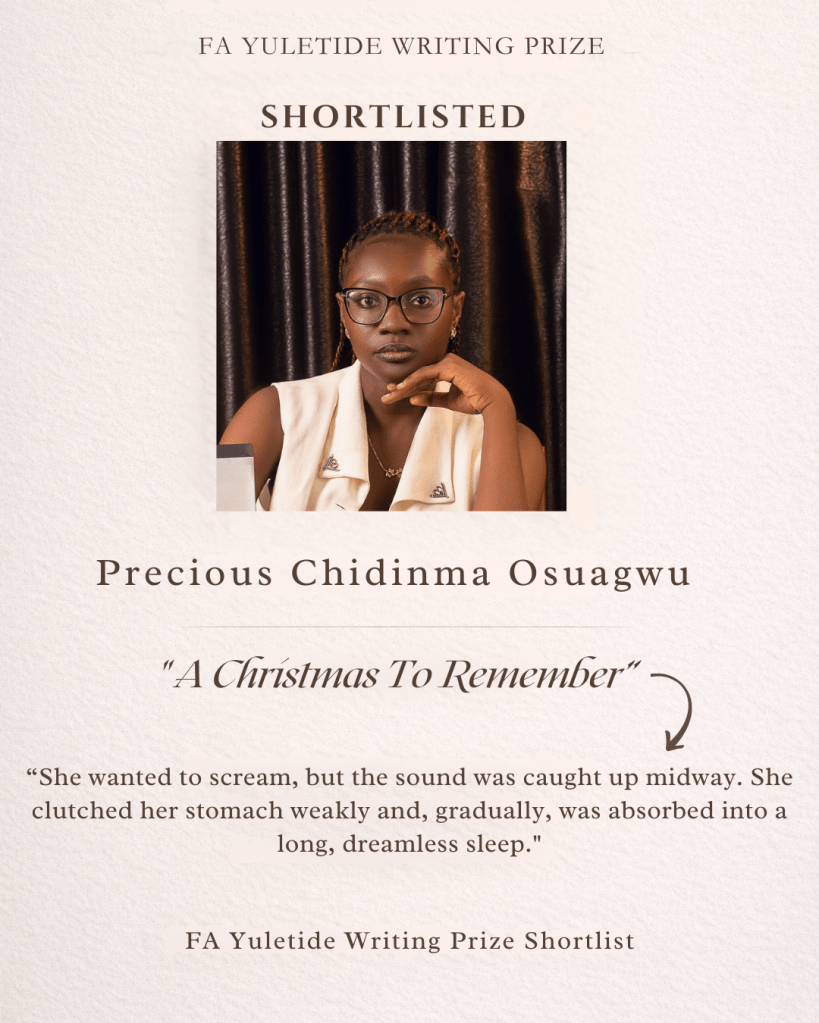
A Christmas To Remember starkly portrays poverty, hunger, and desperation set within a below-average Nigerian household, which is the reality of many Nigerians. Through small, recognisable details, the story captures how hardship can strip one of choices, before it turns violent.
The story stands out for its social realism and emotional restraint. It does not sensationalise poverty or its tragic outcome; instead, it shows how love, hope, and survival instincts can curdle into something fatal when there are no safety nets.
9. The Harmattan’s Feast – Nelson Precious Chinaturum
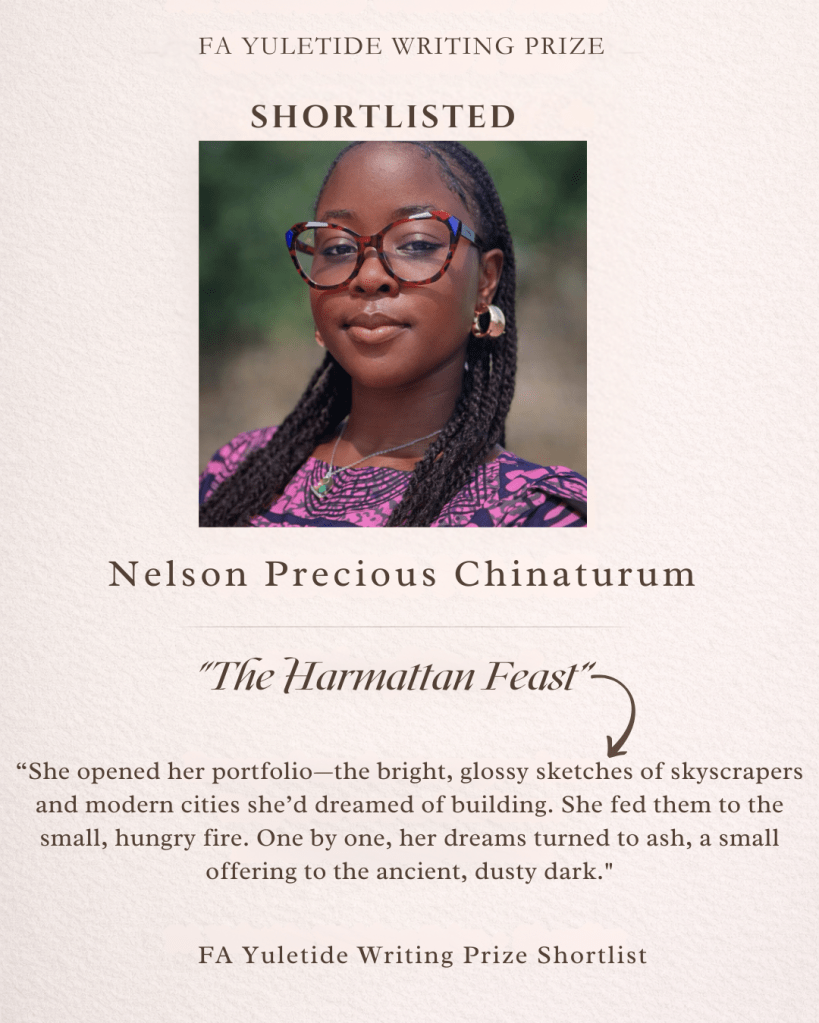
The Harmattan’s Feast utilizes the harmattan season to reflect the realities of people affected by drought, hunger, and the fear of scarcity. Set in a northern community, it shows how environmental hardship becomes something people explain through ritual and belief, especially during Christmas when survival feels uncertain.
The story stands out for its original idea and clear social grounding. By transforming famine and poverty into a mythic presence, it captures the tension between personal escape and communal responsibility in a way that feels deeply rooted in lived experience, rather than abstraction.
10. No Calm After A Storm – Ademiju Omotomiwa Boluwatife
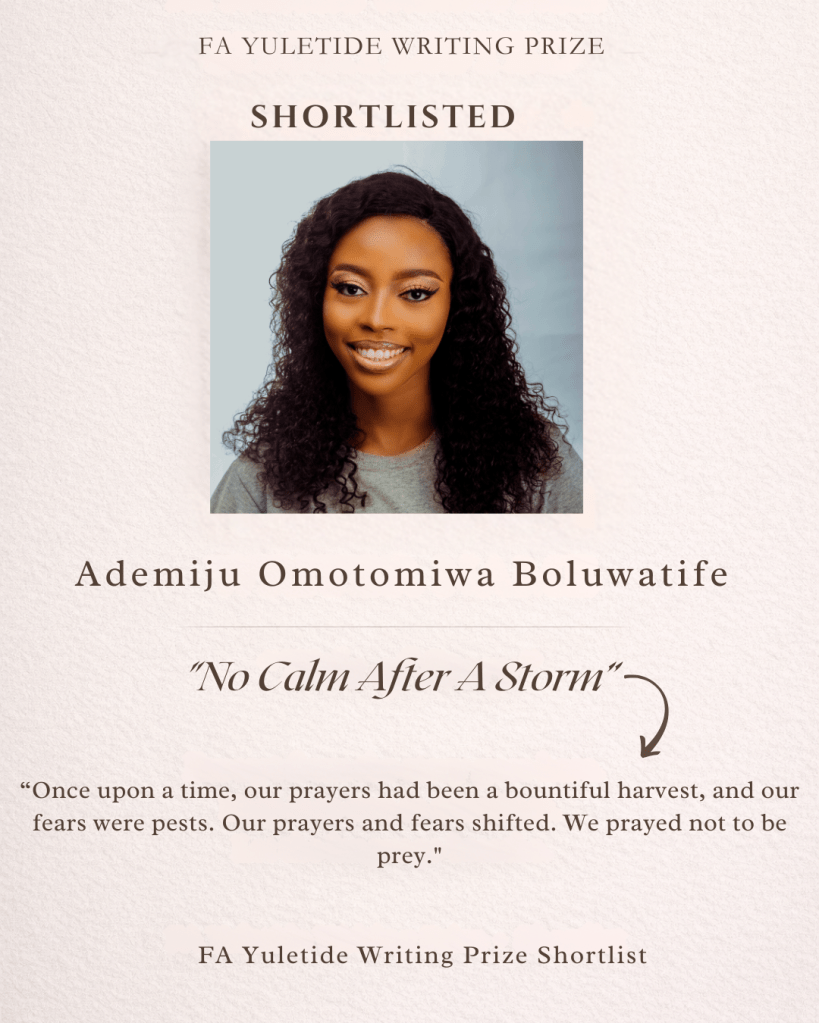
No Calm After A Storm is a powerful story that creatively and expertly reveals the impact of terrorism and armed violence on rural communities in Nigeria, where repeated attacks have emptied villages, destroyed farmlands, and turned December from a season of yuletide celebrations into a time of fear. Through memories of abandoned homes, mass burials, and forced displacement, the story captures how insecurity erases both people and the rhythms that once held communities together.
The piece stands out for its collective perspective and emotional restraint.
Rights
Writers retain full copyright to their work.
By submitting, entrants grant the FA Yuletide Writing Prize permission to publish winning or shortlisted stories with author credit for promotional purposes.
Submissions Closed for 2025/2026
GOODLUCK!
FA Yuletide Writing Prize © 2025, Powered by FA Company LTD.
 UsEveryday